
-III-
A vintage Bentley arrived at the hotel to chauffeur me to Heathgrove for my luncheon with Vivienne. A little over the top for a ride through the country, but who was I to niggle?
The Bentley’s emblematic hood ornament nosed through the estate’s wrought-iron gate. An expanse of pastoral parklands spread like an emerald carpet. The car veered up a slight incline to a stone monstrosity with elongated windows. The manor’s rocky face, weather-lashed as a sea crag, greeted with the warmth of an asylum.
The front door’s massive height suggested very tall people lived behind it.
I rang the bell.
A man in formal attire leveled a generous nod and, with a baritone voice, greeted, “Welcome to Heathgrove, Ms.—” Only to step back, stilted, guarded, almost frightened. Something about me, my look, my demeanor popped his button brown eyes. Color washed from his face. He didn’t strike me as someone easily flustered. He quickly righted himself. With his rigid sensibilities reinstalled, he pivoted sideways and bid me to enter. “Ms. Stuart.”
I hesitated, unsure of what I was entering.
The foyer soared to an atrium. But it did little to brighten the murky passageways.
Medieval battleaxes and swords dominated the main wall, fortified with a suit of armor.
I leashed my urge to remove a foil and shadow parry with the knight.
“Are these originals?”
“Why, yes,” the man said with pleated cheeks and pickle-puckered lips. “They’ve been in the Cavanaugh family for centuries.”
To counter my faux pas, “Exquisite pieces—museum quality.” My gaze combed the family crest—the initials A.O.E. highlighted beneath a banner. “What sort of bird is that?”
“An owl, madame.” The gesture of his hand directed me to cease ogling like a commoner and follow him to a sitting room. “Lady Vivienne will be with you shortly.”
“And you are?” I asked.
“Childers, the butler.” He closed the pocket doors with a raised brow, likely relieved at being rid of me.
While waiting for Vivienne, I perused the cold marble busts and larger-than-life portraits of dead Lords and Ladies: grand dames in plumed hats and sumptuous velvets peered down their prominent noses and weak chins. Patriarchs posed with horsey arrogance alongside their menagerie of hounds in anticipation of the would-be hunt. Jointly, four centuries of Cavanaughs sized me up from Corinthian columns and fourteen-foot Wedgewood-blue walls—dripping with gobs of meringue molding.
I imagined their bubble comments: She’s not one of us.
A charcoal sketch of a medieval castle hung in a niche. The artist signed it, Peannròs.
The delicate perfume of lavender floated through the room.
The source was indiscernible.
I pivoted to the fireplace.
Swords of sunlight sliced through the mullioned windows and struck a gilded frame over an ebony quartz mantel. An evocative portrait of a young woman with alabaster skin and salient blue eyes posed atop a bluff pitched against a tumultuous sky.
The artist captured her haunting beauty as the eye of the storm.
Her posture, while regal, stood defiant, her gaze penetrating yet elusive. No doubt, a story lurked behind her pensive smile in how she loomed over the room of effigies for some perceived slight or misdeed.
A curious pendant hung from her neck: an upside-down triangular medallion.
From an oblique perspective, something lay familiar in the hollows of her face, shadowy as a trope in a recurring dream, yet intimate. A vague, frightening silence emanated from her like fire banked in cool ash waiting to flare.
A wave of warmth brushed past me—body heat.
I turned, and a nearby drape rippled. The windows were closed. Sealed shut.
The silent witnesses stared down from their lofty perches—a shrewd knowingness tweaked in their enameled faces. Yes, they saw it, too. But what did I see? The fluttering of an abstruse draft, a wayward current shifting through the house—nothing more.
The pocket doors scratched open with a cat-clawing squeal.
“Danielle! So glad you’re here.” Vivienne glided in, spiriting the phantasma from the room with a flounce of her floral dress steeped in drowsy yellow roses. “Sorry to keep you waiting. I was attending to last-minute details for our luncheon. It’s such a lovely day. I thought we’d picnic by the lake.”
The air waffled again, carrying a heady profusion of lavender past the wall of weapons and the knight through the foyer, following us outside—
Vivienne didn’t turn or remark; her pace remained steady and fluid.
We crossed the lawn to a dock set with a linen-draped table and wicker chairs plumped with sunburst-orange cushions.
“I just…” Vivienne’s words lagged behind her thoughts. Her sightline traveled to an island in the middle of the lake, then swung back. “I adore this time of year when the lavender is in bloom...”
“Yes, it’s inescapable,” I said, filling the gap in her unspoken thought, still idling over the island.
“A perfect setting. Don’t you think?” Vivienne asked, opening a wicker picnic basket.
“Lovely, I said. “Serene as a Claude Lorrain painting come to life.” The lake, that is.
It lay like nickel-plated glass, reflecting the island’s gothic sulk.
A swooping figure darted between us, and I listed back.
The bird snatched something from the water. A fish wrangled unsuccessfully in its talons.
“I’ve never seen a white hawk.”
“It’s a snowy owl. Family mascot.”
“Yes, I… noticed.” For the third time this week.
I studied Vivienne’s body language for subtleties often pleated into one’s façade. She gnawed her lower lip, a telltale hint of a guarded secret clenched behind her Crest-white teeth.
She pulled a crudité platter and an uncorked wine bottle from the basket and filled our glasses only to cast another faraway gaze at the island.
Something out there had manifested in an opaque form only she could see.
One way to snap her back from the edge: a distraction. There weren’t too many options. The closest thing at hand was the wine bottle. Private Reserve. “Heathgrove has a vineyard?”
It sounded lame. But it worked.
She pivoted. “Yes. But it’s small, just for personal use. Childers is our vintner. It’s a special blend.”
Too fruity, with a metallic, bitter undertone, and I set down the glass.
Vivienne removed her sandals and perched dockside and, with a deep sigh, kicked her toes through the water. Swirling her wine, she asked, “Do you believe in serendipity?”
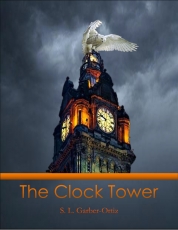
“No. I don’t.” Serendipity is a word people assign to explain the inexplicable, like strangers meeting at the intersection of chance and fate. I no longer believed our encounter at Edinburgh Castle was serendipitous, any more than the man at the clock tower continually crossing my path was accidental happenstance. It beset me with a nagging suspicion the incidents were related, though I’d yet to determine how.
“Do you fancy the wine?”
She noticed I hadn’t drunk it.
Usually, I wouldn’t hesitate; I love wine. Something seemed off-putting with this vintage, like moldy fruit cut with a rusted, dirty knife. While I didn’t wish to be rude, I didn’t want botulinum poisoning, either, and lied, “I...don’t drink...alcohol.”
“There’s some bottled water in the basket. I’ll finish yours.”
I decanted my glass into hers and removed the bottle from the basket.
“It’s an acquired taste...”
Yeah, if you’re noseblind and tongue deaf.
“I adore it,” she said, sipping greedily. “It’s a unique blend of blue lotus flowers. It soothes me and evokes a cheerful memory.” Vivienne submerged her feet, swishing them, angling at the contours of a reflected reverie, rippling through the water. “It was a day, much like today, when she called to me like a siren whispering through the trees. She comes once a year when the lavender is in bloom.”
If I hadn’t experienced the phenomenon she spoke of while in the sitting room: the lavender, body heat, unexplained whiffle, I might have pegged her for a loon.
Perhaps I had misjudged Vivienne, and now I was curious. “Who is she?”
“The lady in the lake... She’s a beguiling creature with long, dark, wavy hair and eyes as blue as the lake. Like yours....” Gazing at me reflectively with glassy eyes and button-round dilated pupils, she rose. The dappled light bathed her skin. She sat across from me with a radiant flush, poured another glass of wine, and flopped back in the seat, her head lolling slightly. “And the lake, oh, the lake...” professing it as an eighth wonder.
“You mean... this lake?”
“Heavens, no. The underground lake on the island. Blue as a sapphire jewel. Perhaps before you leave Wiltshire, you’ll visit again, and I’ll show you.”
“I leave the day after tomorrow” and hadn’t planned to return. “When did all this start?”
“I was but a girl, seven. My mum fancied the solitude and untamed wildness of the island. She’d sit at her easel painting while I’d roam about. That day, I climbed into the cenote and saw the lady in the lake. We swam through a channel to a cave—a scant ray of light from somewhere set off a bedazzling spectacle on the walls and ceiling. Crystals twinkled like distant stars on a moonless night. Of course, through the eyes of a child, they were diamonds, sapphires, emeralds, and amethysts.”
Vivienne’s projection and manner had a conspicuous disconnect, like an elusive puzzle piece with rounded edges that didn’t fit the picture. The Vivienne sitting before me wasn’t the same Vivienne I met in Edinburgh Castle: Composed. Confident. Worldly. Granted, they looked alike, though hard to tell, that Vivienne arrived all glammed up, a third of her face concealed behind wraparound sunglasses. This Vivienne sat with fragile, child-like innocence, enveloped in a gauzy daydream detached from the world she lived in with a deep longing to return to the one she imagined. Warbling its enchantment with pear-shaped tones.
Possibly, the effects of the wine contributed to it.
“We stepped through a waterfall,” she continued,” to an exquisite garden. Something about it made all its colors luminous; a world with a warmer, more penetrating, richer light.”
Vivienne pressed her eyelids as if drawing the memory from a darkened tunnel. “She wore a pendant: a crystal that revealed the future, and it was ghastly. All those poor, wretched souls ...”
With that, I swerved back, like when someone at a cocktail party tells you about their crop circles and alien abduction. While part of me remained intrigued by what the lady in the lake revealed about the future, which was so awful, it wasn’t enough to indulge Vivienne further about crystal caves and multiverses.
“Did you tell your mother?” trying to steer her back to a semblance of reality.
“‘That’s lovely dear, ’she had said, “dismissing it as a child’s wild musings. You know how mums are.”
“Um, yes.”
“The following year, she called to me again...”
Each word, delivered with slow gravity, hung in the air. I reasoned Vivienne was doing it for my benefit to absorb, drop by drop, this thing she needed to confess.
She swirled her glass, staring into the wine as if gazing into the past. Reliving the scene moment by moment, her voice hitched, and the words fell brittle and broken, “...I found my mother... in the lake... floating face down. Afterward, my father forbade me from going to the island. He reviled it as a place of evil.” Vivienne smoothed her dress as if to iron the creases from her statement, then louvered her eyes. “I hear her calling...”
Poor Vivienne. Lost in a dreamy sadness, a revered melancholy. A tragic, lonely soul held hostage by the memory of finding her mother dead, and I felt for her, but—
“What a horrible thing to witness. My deepest sympathies for your loss, Vivienne. Forgive me, but how does this involve my mother?”
She set down the glass and stared at the island. Again. Then returned to the conversation. “So sorry, didn’t mean to blither on like that. Yes, of course, that’s why I asked you here...”
I latched onto her every word, anxious, waiting for her to realign her thoughts. Again!
“...I chair an organization assisting people of adoption find their birth parents, and, well, your name popped up in the registry as a match to a recent DNA sample.”
“How do I contact her?”
“It’s a bit complicated.” Her face crinkled at something over my shoulder.
I turned.
A shadow emerged: Childers, the butler.
Vivienne jerked to her feet. “Excuse me.” She stepped away, and they huddled. She turned back, her face drawn taut as cellophane. “I’m so sorry to cut our afternoon short. But I have an urgent meeting with my solicitor...”
“Vivienne, wait. How did you know I would be at Edinburgh Castle that day?” There were plenty of questions I should’ve asked. Lots. But that popped into my head first.
The earlier flush drained from her face, and she stole a cautious glance at Childers.
I coiled my fingers around her wrist and felt a palpable fear pulsing through her.
“I’ve said,” her tone truncated, “more than I should.”
Not enough to suit me. Shouldering Childer's sightline, I asked, “And my mother?”
The least she could do was answer that one.
She wrung my question from her hands as if it had left an unpleasant, sticky residue and held my gaze with renewed composure. “The Sisters of St. Augustine will contact you...”
Before I could ask how she knew the Sisters of St. Augustine, she had dashed across the lawn to the house with Childers on her heels.
Past the wrought-iron gate, beyond the sumptuous grandeur of the estate’s sloping plains, sweeping vistas, and the opiating effect of lavender, I retraced Vivienne’s comment: “…a place of evil...”
Even in daylight, with its divergent colors of green and brown, rolling mist, and looming shadows, the island lorded over Heathgrove like a blackmailer with impeaching secrets.
What lay amid its trees and hollows that drew Vivienne like a fly to a spider’s web?
© Copyright 2026 S. L. Garber-Ortiz. All rights reserved.
Regular reviews are a general comments about the work read. Provide comments on plot, character development, description, etc.
In-line reviews allow you to provide in-context comments to what you have read. You can comment on grammar, word usage, plot, characters, etc.

Masterful bit of writing...again :) getting a chapter at a time is tortuous.

Author
Reply
Thanks for the review, Barry. Sorry about the piecemeal. I am still researching the next subject matter. I'll try to get the next chapter posted in a few days. ;-)



Barry Campbell