
Points: 2.51 ( 1.67 Regular Review + 0.84 New Member Bonus )
He could hear them before he reached the kitchen. His father‘s voice, low and deliberate, with the pauses he put in when he wanted something to land.
“It‘s the same conversation every time, Ruth. He shouldn‘t have to sort himself out in the morning because you can‘t get up.”
Ben pushed the door open. The kitchen smelled of last night. Paul was at the counter with his jacket already on, his coffee in his hand. Ruth was at the sink with her back to both of them.
Ben sat at the table.
Paul looked at him. Ruth turned around. She pressed two paracetamol out of the foil and swallowed them with a glass of water, her eyes still half closed.
“You can do your own lunch,” she said to Ben. “The chicken‘s in the fridge. There‘s bread.”
Ben got up and opened the fridge. He stood looking at it.
“Leave it,” Paul said. Then to Ruth: “He‘s going to be late.”
“I told him he could do it himself.”
Paul said nothing. He set his coffee down, took the chicken out, and started cutting.
Ben watched his father slice the bread and felt a particular embarrassment, and couldn‘t immediately work out which of them it was for. Part of him thought Paul was being awful. Part of him thought Ruth actually should have done it and hadn‘t, and that he was wrong to think Paul was awful for noticing. He wasn‘t sure which way that made him disloyal.
“The knife‘s in the block,” Ruth said.
“I know where the knife is.”
She filled her glass at the tap and stood drinking it.
“You‘d have been fine,” Paul said, “if you‘d left it at the one bottle.”
She kept drinking. She didn‘t say anything.
Ben ate his cereal and watched his mother‘s back. He thought about the poster in the attic: RUTH POWER // KEEP OUT, the skull in blue biro underneath. If Paul would just go to the car, or back upstairs, or find something in another room. He‘d found something she didn‘t know about. He tried to picture his mother writing those words.
He looked at the hand holding the glass, the same one that signed his school forms. He thought about the other things that hand had done: cutting his nails when he was small, holding each finger in turn and leaning in close; writing shopping lists on the backs of envelopes, the same few items in the same order every week. He couldn‘t connect any of that to the girl who had written KEEP OUT in block letters and drawn the skull. He wondered what music she‘d listened to. He wondered if Paul had known her then, before she was this, whether they‘d been the same kind of people. Whether she‘d ever been frightened of someone finding the posters.
RUTH POWER. It was her handwriting, he‘d recognised it. But it felt like someone else‘s name.
“I‘m not going in today,” Ruth said.
Paul looked up from the lunchbox.
“Migraine.” She said it flatly. “I‘ll ring them now.”
“I‘ll bet,” Paul said. He put the lid on the lunchbox and left it on the counter. “I‘ll drop him on my way.”
*
Paul drove with the radio on. His father wasn‘t a talker, not with Ben. He had plenty to say at dinner, at school events, around other people. In the car it was just the radio.
After a while Paul said, without looking at him: “You get that maths test back today?”
“Thursday.”
A minute passed.
“You need to keep that average up.”
“I know.”
Ben looked out the window. He thought about Johnnie‘s dad, who coached the under-twelves and shouted from the sideline and bought everyone chips after. Bobbie‘s dad made terrible jokes and laughed first at them himself. He couldn‘t imagine his father doing either of those things.
He had got eighty-four in a test once in fifth class. Paul‘s first question had been what happened to the other sixteen.
There was nobody else for Paul to worry about. Everything landed on Ben.
Paul pulled up at the gate. “See you later.” Ben got out.
*
At morning break Johnnie had a football and they kicked it against the art room wall for a while, not saying much. Bobbie had been stuck on the same level for three days and wanted to explain why it wasn‘t his fault. They talked about that for a bit. Johnnie said it was because Bobbie played too defensively. Bobbie said that was objectively wrong. Bobbie usually said things were objectively wrong when he knew he couldn‘t really argue the point. They moved on to the match at the weekend, whether it would be a win or a draw. Bobbie thought the manager would rotate. Johnnie said he‘d be an idiot to.
After a while they sat down against the wall. Bobbie had a cereal bar and was eating it in pieces.
Ben had been trying to bring it up since the morning. On the way in, and again during the first period, he‘d nearly said something and each time thought it would sound stupid. Now Johnnie was moving on to something else and Ben said it anyway.
“Something happened last night.”
“What kind of something?” Johnnie said.
Ben told them about the board.
“It spelled your dad?” Johnnie said.
“It spelled DAD. It wasn‘t specifically my dad.”
“So it could have been anyone‘s.”
“Yes. But it moved. Before that it hadn‘t done anything at all.”
Bobbie said he‘d tried one at his cousin‘s in Wexford.
“Did anything happen?” Ben asked.
Bobbie turned the wrapper over in his hands. “Not really,” he said. He didn‘t look up when he said it. He folded the wrapper into a square and put it in his pocket.
“One of the girls was pushing it,” Johnnie said.
For a moment Ben thought that was probably right. That was exactly what had happened. One of them had pushed it and the other had gone along with it and he‘d been watching the wrong pair of hands. He almost didn‘t say anything else.
“Both their hands were on it.”
“So both of them were.”
“They were laughing. They weren‘t even trying.”
“Girls don‘t need to be trying.”
On the far side of the yard Nora and Sophie were sitting on the low wall with some others. Ben looked over for a moment, half expecting one of them to glance up, but they didn‘t. They were talking and laughing about something among themselves, not paying attention to anything around them. The bell went and everyone came in.
*
After school the house was quiet. His mother‘s door was shut at the end of the landing. He dropped his bag at the foot of the stairs and took his shoes off and left them in the hall where Paul didn‘t like him to leave them.
Ben liked the house this way, when whoever was home had disappeared into another room and nobody wanted anything from him. He knew he wasn‘t supposed to. He‘d heard Ruth tell someone once that she worried about him being alone after school, that it wasn‘t right. But he did.
He liked it the way he liked certain other things he wasn‘t supposed to: eating cereal for dinner when nobody was watching, staying up too late on his phone, walking home the long way because he could. There was nobody assessing him. He went to the fridge and took out the last of the orange juice and drank it from the carton and put the empty carton back without thinking.
He turned the television on and lay on the sofa with a cushion under his head. Some programme about people choosing between two houses. He watched it without following any of it.
After a while he got up and went to the window. The sun was coming in at an angle, the way it did in the late afternoon, and he stood in it and let it fall on his face. He did this sometimes. Just stood there and looked out at the garden. Next door‘s washing was still on the line, shirts and a pair of jeans going cold in the shade. A skip had appeared somewhere up the road during the day, bright orange against the grey tarmac. The cherry tree at the back had started dropping leaves, a few of them collecting in the corner by the fence.
He pressed his fingers flat against the glass. It was warm from the sun. And then he was thinking about the planchette, the surface under his fingertips, the moment when it had moved. He‘d been watching Sophie‘s hands, not Nora‘s. He had said this to himself a number of times now and it wasn‘t getting any cleaner.
He turned away from the window and went upstairs.
*
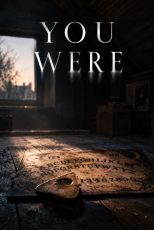
The board was where Sophie had shoved it, the planchette lying a little way off. Ben set the board on the flat lid of one of the suitcases and picked up the planchette. He smoothed the bowed edge with his thumb and set it down in the centre.
He put two fingers on it, the way he had the night before, and held still.
He tried to find the exact position, not pressing, not lifting, just resting. Light enough that if anything pulled in any direction, even slightly, he would feel it and know it wasn‘t him. The attic was quiet. He became aware of his breathing and tried to stop thinking about it, which made it the only thing he could think about. He waited.
Nothing moved.
He shifted his fingers to the left and back to the centre. He tried a count of five with his breath held. He tried looking away at the boxes on the far wall, as though the board needed to think he had lost interest.
The planchette stayed exactly where he‘d put it.
He took his hands off. Then he put one finger back on the planchette and pushed it himself, slowly, toward the D. He felt the slight drag of it on the board surface, the resistance and then the give. He did it again with two fingers, lighter. He tried to find the pressure that would move it without feeling deliberate.
He couldn‘t. Even at the lightest touch, he knew he was doing it.
He moved it to A, then back to D. He tried to remember whether that was what last night had felt like.
He wasn‘t sure any more. It had been dark, and they‘d been half laughing, and he‘d been watching Sophie‘s hands, not Nora‘s. He thought it had felt different. But he might already be remembering it the way he needed it to have been.
He set the planchette back in the centre. He closed his eyes, rested his fingers on it as lightly as he could, and tried to think of a letter without moving toward it. He waited, counting, trying to hold his fingers still while also not thinking about his fingers, which was impossible.
Nothing pulled. Nothing moved.
He sat back and looked at the board.
He could account for Sophie‘s hands. He had been watching them. He could not account for Nora‘s. That was the single thing his experiment had not settled: not whether the board worked, but whether he had been watching the right person. It was possible one of them had pushed it and the other hadn‘t known. It was possible both had. It was possible he‘d felt something that wasn‘t there because he‘d wanted to.
But he had not been watching Nora.
He put the planchette in the Games box, folded the board on top of it, replaced the Connect Four pieces, and closed the lid.
He climbed back down and went to his room and sat on the bed. The television was still on downstairs, the sound coming up through the floor. He felt stupid, though there was nothing to feel stupid about. Nobody knew he‘d been up there.
The only thing he knew for certain was that he‘d been watching the wrong pair of hands.
© Copyright 2026 Alessandro Alessio. All rights reserved.
Regular reviews are a general comments about the work read. Provide comments on plot, character development, description, etc.
In-line reviews allow you to provide in-context comments to what you have read. You can comment on grammar, word usage, plot, characters, etc.
There are no connections to this writer. Send a connection request.


 Bonus
Bonus
